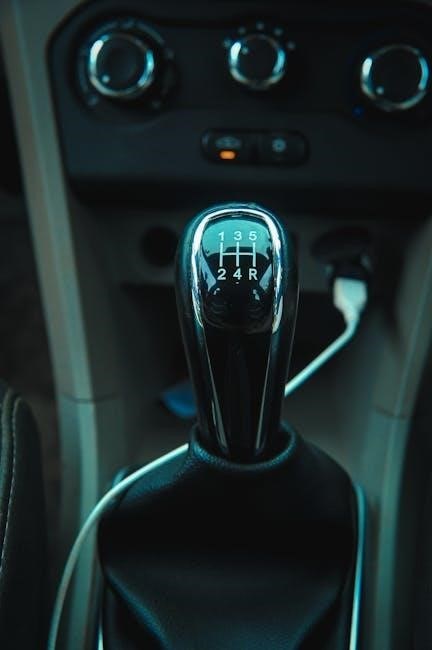
Three-speed manual transmissions, once commonplace, represent a pivotal era in automotive technology, offering a direct connection between driver and machine.
These systems, prevalent from the 1930s through the 1970s, gradually yielded to automatics, CVTs, and more advanced designs, yet retain a dedicated following.
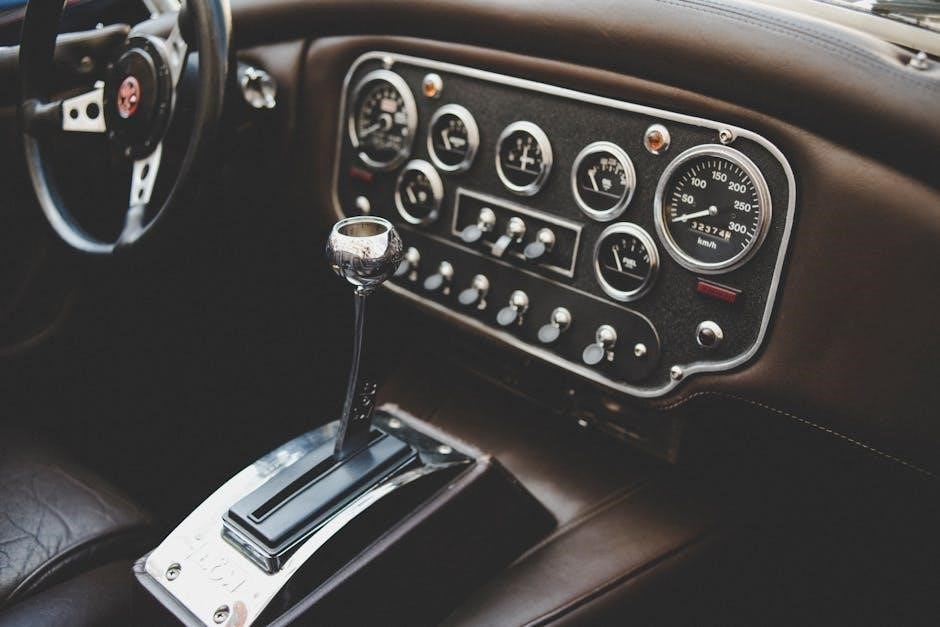
The introduction of the column shifter in 1938, particularly in large American cars, facilitated seating for three passengers, while sports cars favored floor shifters.
Historical Context & Popularity
Early adoption of three-speed manuals coincided with the rise of mass-produced automobiles, offering a balance of simplicity and driver control. Initially, these transmissions lacked synchronization, demanding skilled drivers proficient in “double-clutching” to smoothly change gears.
Their popularity peaked in the mid-20th century, becoming the standard for most American vehicles. The column shifter, debuting in 1938, became a defining feature of American cars for decades, maximizing seating capacity. Simultaneously, sports cars embraced floor-mounted shifters, enhancing the driving experience.
However, as automatic transmissions gained traction, offering convenience and ease of use, the three-speed manual began a slow decline, eventually superseded by more sophisticated transmission technologies.
Evolution from Earlier Transmissions
Prior to the three-speed manual, vehicles utilized simpler, often two-speed transmissions, or even direct-drive systems. These early designs lacked the versatility needed for varying road conditions and speeds; The evolution to three speeds represented a significant leap, providing a wider range of gear ratios for improved performance and efficiency.
Early three-speed transmissions were often non-synchronized, requiring drivers to match engine speed to road speed during shifts. Later iterations incorporated synchronizers, simplifying the shifting process and reducing wear on the gears.
The addition of vacuum assist mechanisms aimed to ease shifting effort, though these systems were prone to failure, creating a frustrating driving experience.
Core Components of a Three-Speed Manual Transmission
Essential components include gears with specific ratios, shift forks controlling gear selection, and a selector mechanism. Early models often lacked synchronizers, impacting shift smoothness.
Gears and Gear Ratios
The heart of a three-speed manual lies in its gearsets, meticulously designed to provide three forward speeds and reverse. Each gear possesses a unique tooth count, dictating the transmission ratio. A lower (numerically higher) first gear delivers increased torque for initial acceleration, while higher gears prioritize fuel efficiency at cruising speeds.
These ratios are crucial for matching engine output to vehicle demands. For example, a four-wheel drive application might utilize a 1:1.282 ratio. The selection of appropriate gear ratios directly influences the vehicle’s acceleration, top speed, and overall drivability. Understanding these ratios is fundamental to appreciating the transmission’s function.
Shift Forks and Selector Mechanism
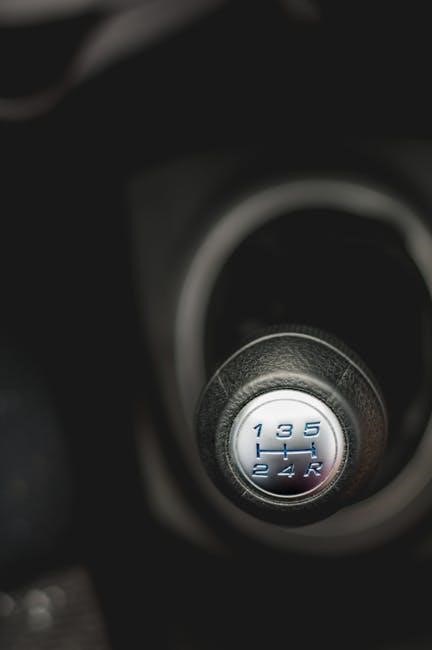
Shift forks are integral components, responsible for physically engaging the desired gears within the transmission. Connected to the selector mechanism – whether a floor-mounted or column-shifted lever – they translate driver input into gear changes. The selector mechanism, guided by shift linkage, precisely positions the shift forks.
Movement of the shift lever actuates the forks, sliding synchronizer sleeves (or directly engaging gears in non-synchronized transmissions) to lock the selected gear to the output shaft. Precise alignment and smooth operation of these components are vital for seamless shifting. Wear or misalignment can lead to difficulty selecting gears or even transmission damage.
Synchronizers (or Lack Thereof in Early Models)
Early three-speed manuals often lacked synchronizers, demanding precise matching of engine and transmission speeds for smooth gear changes – a skill requiring considerable driver finesse. This “double-clutching” technique bridged the speed difference before engagement. Later models incorporated synchronizers, employing friction cones to equalize speeds automatically.
Synchronizers significantly simplified shifting, reducing wear on gears and making the transmission more accessible to a wider range of drivers. Full-synchro three-speeds, like the A230, offered smoother operation than non-synchronized versions like the A903 and A745. The presence or absence of synchronizers defines a transmission’s operational characteristics.
Operation of a Three-Speed Manual Transmission
Shifting involves disengaging one gear, selecting another via shift forks, and engaging it, relying on driver skill or vacuum assist for smoother transitions.
Early transmissions sometimes required shifting directly from first to third, then to second.
The Shifting Process: 1st to 2nd to 3rd
The fundamental operation of a three-speed manual transmission centers around sequentially engaging gears to optimize engine power and vehicle speed. Starting in first gear provides maximum torque for initial acceleration. As speed increases, shifting to second gear offers a balance between power and velocity.
Finally, third gear delivers the highest speed potential, albeit with reduced acceleration. However, some older, non-synchronized transmissions presented unique challenges. Drivers sometimes found it more effective to shift directly from first to third, then down to second, particularly if the vacuum assist mechanism—when equipped—failed. This unconventional method circumvented difficulties in smoothly engaging second gear without synchronization.
Successful shifting requires coordinating clutch pedal operation with the gear selector, ensuring a seamless transfer of power.
Understanding Gear Engagement
Gear engagement within a three-speed manual transmission is a mechanical process relying on interlocking teeth to transmit rotational force from the engine to the wheels. Each gear ratio alters the relationship between engine speed and wheel speed, influencing both torque and velocity.
When a gear is selected, shift forks move synchronizer sleeves (if present) to couple the desired gear to the output shaft. This creates a direct path for power flow. Without synchronizers, as found in earlier models, precise timing and matching engine speed are crucial to avoid grinding noises and damage.
Proper engagement ensures efficient power transfer and smooth vehicle operation, while misaligned gears result in noise and potential mechanical failure.
Vacuum Assist Mechanisms (and their failures)
Vacuum assist mechanisms were implemented in some three-speed manual transmissions to reduce driver effort during shifting. These systems utilized engine vacuum to provide a boost, making gear changes easier, particularly into first gear. However, they were prone to failure, often due to cracked or disconnected vacuum lines, or a malfunctioning diaphragm.
A failing vacuum assist could result in a significantly heavier, more difficult shifting experience, sometimes described as “miserable.” Drivers often adapted by skipping gears, shifting directly from first to third, then to second, to circumvent the issue.
These systems, while intended to improve usability, became a common source of frustration and maintenance headaches for owners.

Identifying Different Types of Three-Speed Manuals
Distinguishing between non-synchronized and full-synchro three-speed manuals is crucial; shop manuals, like those available at MyMopar, detail these differences for identification.
Non-Synchronized vs. Full-Synchro Transmissions
Early three-speed manuals often lacked synchronizers, demanding precise rev-matching for smooth shifts – a skill requiring considerable driver expertise. These transmissions relied on the driver to match engine speed to the gear, preventing grinding.
Full-synchro transmissions, a later development, incorporated synchronizers to automatically equalize speeds, simplifying the shifting process and making it more accessible to a wider range of drivers.
Converting a non-synchronized transmission to full-synchro is generally considered impractical; the internal components are fundamentally different, as detailed in service manuals. Understanding these distinctions is vital when assessing or restoring vintage vehicles, impacting both drivability and restoration costs.
The A903 and A745 are examples of non-synchro types, while the A230 represents a full-synchro design.
Identifying Full Synchro Three-Speeds
Pinpointing a full-synchro three-speed requires delving into specific transmission codes and referencing detailed shop manuals. The A230 transmission, for instance, is definitively a full-synchro unit, contrasting with earlier non-synchronized designs like the A903 and A745.
Consulting resources like MyMopar provides free access to these crucial service manuals, enabling accurate identification. Examining the transmission’s internal components, as illustrated in these manuals, reveals the presence of synchronizer mechanisms.
Visual inspection can offer clues, but definitive confirmation necessitates referencing the correct documentation. Knowing the vehicle’s original transmission code is paramount for accurate identification and parts sourcing during restoration or repair efforts.
Proper identification ensures correct maintenance and avoids mismatched components.
Specific Examples: A903, A745, A230
The A903 and A745 represent early three-speed manual transmissions, notably lacking full synchronization. These were common in many American vehicles, demanding skilled drivers adept at heel-and-toe downshifting to avoid grinding gears. The A745 was a heavier-duty version of the A903.
In contrast, the A230 signifies a significant advancement – a fully synchronized three-speed. This offered smoother, easier shifting, appealing to a broader range of drivers. It appeared in later models, representing a refinement in transmission technology.
Understanding these codes is vital for restoration and repair. Identifying which transmission a vehicle originally had dictates the correct parts and procedures for maintaining its authenticity and functionality.
These codes define distinct driving experiences.
Applications and Vehicles Featuring Three-Speed Manuals
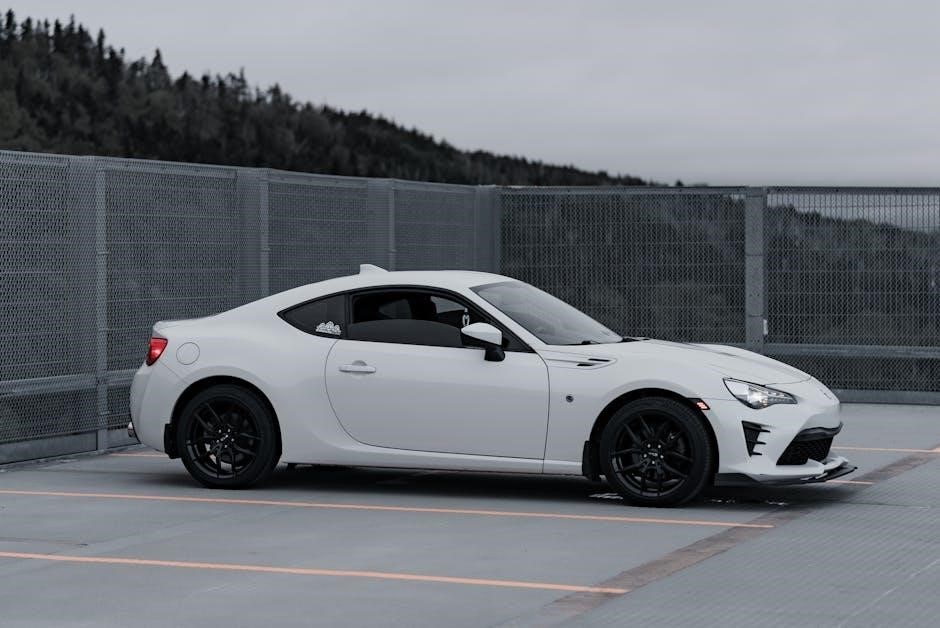
Three-speed manuals were widely used in American cars from the 1930s-1970s, and found a niche in 1960s sports cars with floor shifters.
They also appeared in four-wheel drive applications, utilizing a 1:1.282 ratio.
American Cars of the 1930s-1970s
Throughout the mid-20th century, the three-speed manual transmission was a cornerstone of American automotive engineering. Early models, often non-synchronized, demanded considerable driver skill for smooth operation, requiring precise rev-matching during downshifts.
As automotive design evolved, so did these transmissions, with manufacturers gradually incorporating synchronization to enhance ease of use. The advent of the column shifter in 1938, particularly in larger American vehicles, was a significant development.
This design maximized interior space, accommodating three passengers on the wide bench seats common at the time. These transmissions powered a vast array of vehicles, from everyday sedans to muscle cars, representing a fundamental aspect of the American driving experience for several decades.
Sports Cars and Floor Shifters in the 1960s
The 1960s witnessed a divergence in transmission preferences, particularly within the burgeoning sports car market. While American cars largely embraced the convenience of column shifters, sports cars, both domestic and imported, overwhelmingly favored floor-mounted three-speed manuals.
This configuration offered a more direct and engaging driving experience, appealing to enthusiasts who prioritized performance and control. The shorter throw and tactile feedback of a floor shifter facilitated quicker, more precise gear changes.
These transmissions, often fully synchronized, allowed for smoother operation and reduced the need for advanced driving techniques. This era solidified the association between floor shifters and sporty vehicles, influencing automotive design for years to come.
Four-Wheel Drive Applications (Ratio 1:1.282)
Three-speed manual transmissions found a specific niche in early four-wheel drive applications, often utilizing a unique gear ratio of 1:1.282. This ratio was crucial for providing the necessary torque multiplication and control required for off-road driving conditions.
Vehicles employing this setup, particularly those with permanent four-wheel drive systems, benefited from the robust simplicity of the three-speed design. The lower gearing allowed for improved crawling ability and enhanced traction on challenging terrain.
This configuration, documented in technical specifications like those for TUV/German vehicles, demonstrates the adaptability of the three-speed manual beyond standard passenger car use.
Modifications and Limitations
Converting non-synchronizer transmissions to full synchro is generally not feasible; shop manuals reveal significant internal differences making such modifications impractical and costly.
Can Older Transmissions Be Modified to Full Synchro?
The short answer is a definitive no. Attempting to convert a non-synchronizer three-speed manual transmission to a full synchro unit is overwhelmingly impractical and economically unsound. Detailed examination of shop manuals, readily available for download (like those at MyMopar), clearly illustrates the substantial internal differences between the two types.
The components and architecture are fundamentally distinct, requiring a complete rebuild with entirely different parts – essentially building a new transmission within the old case. The cost of sourcing these specialized parts, combined with the extensive labor involved, far exceeds the value of most vehicles utilizing these older transmissions.
It’s a project best left to those seeking originality or restoration, rather than modernization.
Limitations of Converting Non-Synchro Transmissions
Beyond the sheer cost, significant limitations hinder any attempt to modify non-synchronizer three-speed manuals. These older designs demand precise timing and rev-matching for smooth shifts, a skill lost on many modern drivers accustomed to synchromesh assistance. Even with extensive modifications, replicating the feel and reliability of a factory-built full synchro transmission proves elusive;
The internal structure simply isn’t designed to accommodate synchronizer mechanisms without major case machining and component redesign. Furthermore, the gear metallurgy and tolerances of older transmissions may not withstand the stresses imposed by modern driving styles or increased engine power.
Ultimately, the effort yields diminishing returns, often resulting in a compromised and unreliable unit.
The Decline of the Three-Speed Manual
The rise of automatic, CVT, and more modern transmission types gradually eclipsed the three-speed manual, as drivers sought convenience and ease of operation.
Shifting consumer preferences and technological advancements ultimately led to its diminished presence in new vehicle production.
Rise of Automatic, CVT, and Modern Transmissions
The automotive landscape underwent a significant transformation with the introduction and refinement of automatic transmissions. Early automatics, while initially less efficient, offered unparalleled convenience, appealing to a broader range of drivers.
Further advancements, including lock-up clutches to mitigate slip and improve fuel economy, solidified their position. Simultaneously, Continuously Variable Transmissions (CVTs) emerged, providing seamless gear ratios and optimized engine performance.
Modern multi-speed automatics, boasting eight, nine, or even ten gears, further enhanced efficiency and responsiveness. These innovations, coupled with the increasing complexity and cost of manufacturing traditional manual transmissions, ultimately contributed to the decline of the three-speed manual.
Reasons for the Shift in Popularity
Several factors converged to diminish the three-speed manual’s prominence. The increasing demand for driving ease and comfort heavily favored automatic transmissions, attracting a wider consumer base. As automatics improved in efficiency, their fuel economy disadvantage lessened, removing a key barrier to adoption.
Furthermore, the rise of front-wheel-drive vehicles and more complex engine management systems presented challenges for traditional manual transmission designs. Manufacturers prioritized development of more sophisticated automatic and CVT technologies.
The perceived difficulty of mastering a manual transmission, particularly for new drivers, also contributed to its decline, as did a shift in cultural preferences towards convenience.

Collecting Vehicles with Three-Speed Manuals
Vintage cars with three-speed manuals offer a unique driving experience, but require careful inspection for potential issues like worn synchronizers and vacuum assist failures.
What to Look for in a Vintage Transmission
When evaluating a vintage three-speed manual, several key areas demand attention. First, check for smooth engagement of each gear; grinding noises indicate worn synchronizers, especially in later, full-synchro models. Inspect the shift linkage for looseness, as imprecise shifting is common.
For transmissions with vacuum assist, verify the system functions correctly – a failing assist makes shifting difficult. Examine the case for any signs of damage or previous repairs. Pay close attention to fluid leaks, which suggest worn seals.
A thorough inspection of the shop manual is crucial, particularly for identifying specific transmission types like A903, A745, or A230, and understanding their unique characteristics. Download manuals from resources like MyMopar for free.
Potential Issues and Maintenance
Vintage three-speed manuals are prone to specific issues. Non-synchronized transmissions require precise double-clutching to avoid gear clash, a skill lost to many modern drivers. Vacuum assist mechanisms frequently fail, leading to stiff and unpleasant shifting. Worn synchronizers, in full-synchro models, cause grinding.
Regular maintenance involves checking and replenishing the gear oil, inspecting the shift linkage for wear, and addressing any leaks promptly. Avoid aggressive shifting, especially with non-synchro types.
Attempting to convert a non-synchro transmission to full-synchro is generally impractical; the internal differences are substantial, as detailed in shop manuals. Prioritize preventative maintenance to preserve these classic components.